Our History
The story of Elm Grove United Methodist Church began in 1886, when Methodist families in the growing Elm Grove community began gathering for worship in homes and local schools.
By 1896, a Methodist congregation had begun holding regular services in Hands Hall, located above a store. Under the leadership of Rev. Kelly, the congregation became known as the Methodist Mission. The group later worshiped in Chambers Hall, a building that would eventually become associated with the Valley Camp Coal Company.
From 1898 through 1904, Elm Grove was considered a “mission point.” This meant that the congregation did not yet have a full-time pastor of its own. The minister serving Elm Grove also served other nearby churches, including congregations at Fulton, Edgington Lane, and Triadelphia.
Members of the Elm Grove Methodist choir in 1905. Even before the congregation had a permanent church building, music and worship were already important parts of its life together.
A significant step forward came in 1906, when two lots were purchased for $1,400. This property would become the permanent home of Elm Grove's church.
In 1907, Elm Grove became affiliated with the Triadelphia church charge, and the congregation had 22 members.
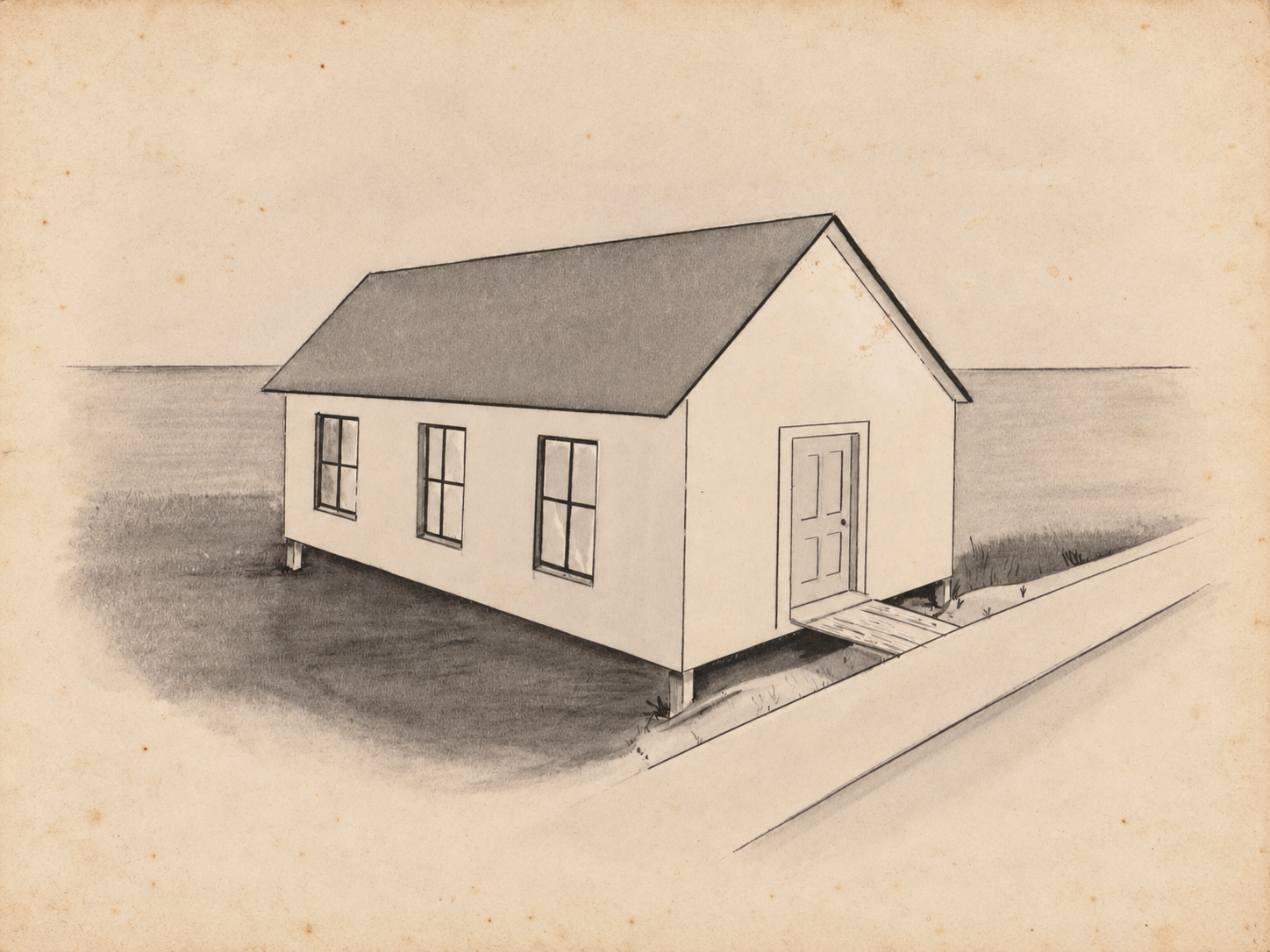
The following year, in the fall of 1908, the congregation built a simple wooden structure that became affectionately known as “The Tabernacle Church.” The building was modest—a plain, unplastered wooden structure raised on high supports with three windows on each side and a single front entrance. Though humble in appearance, the Tabernacle represented an important milestone for the congregation and provided a permanent place for the people of Elm Grove to worship.
The Tabernacle was formally dedicated on September 2, 1910.
Building the Church We Know Today
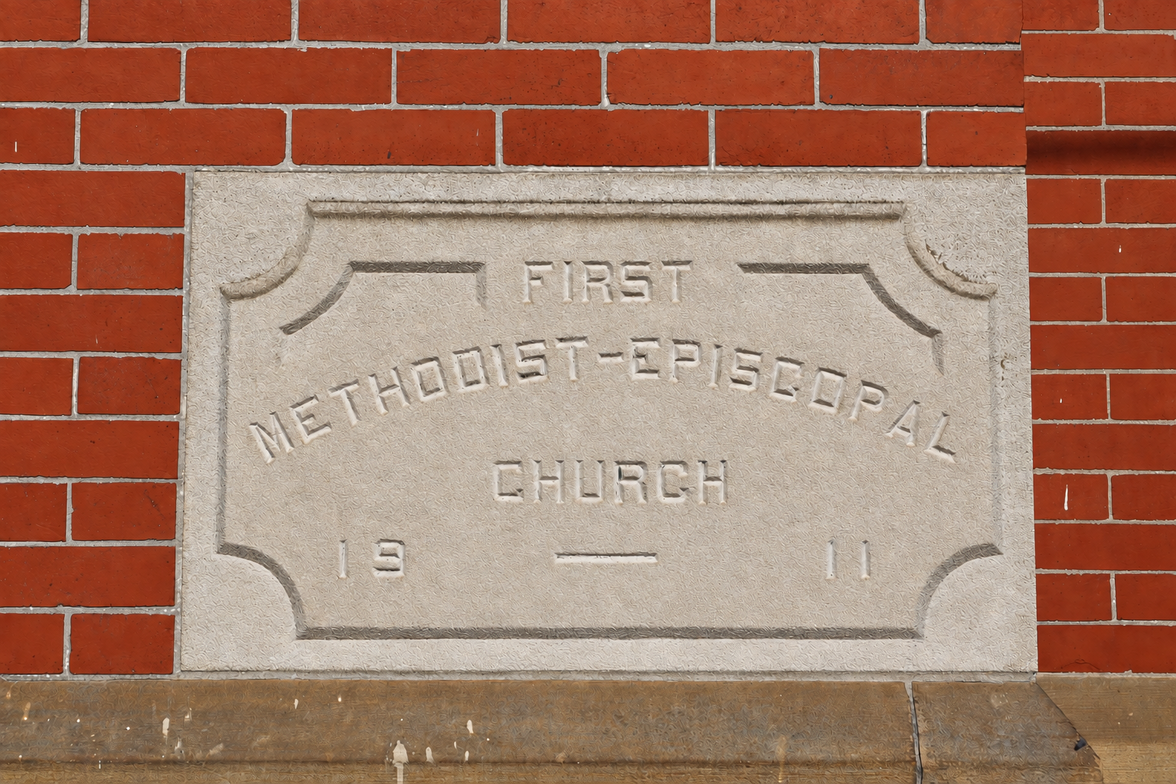
On August 4, 1911, ground was broken for a new church building. The cornerstone was laid on October 22, 1911, on the south side of the building facing Kruger Street. It bears the inscription:
“First Methodist - Episcopal Church of Elm Grove — 1911.”
A collection of items was placed inside the cornerstone, including a Bible, a New Testament, a copy of the Wheeling Intelligencer, the names of church members, and other small articles representing the life of the congregation at that time.
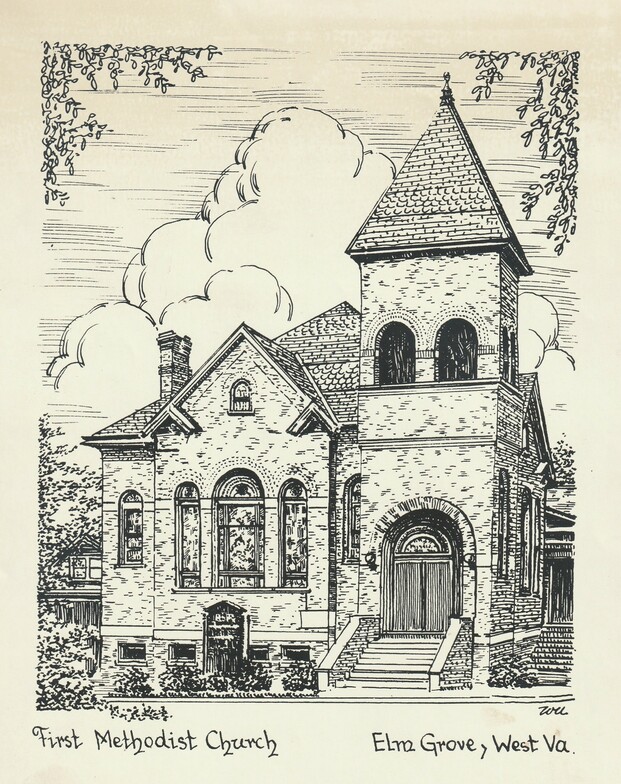
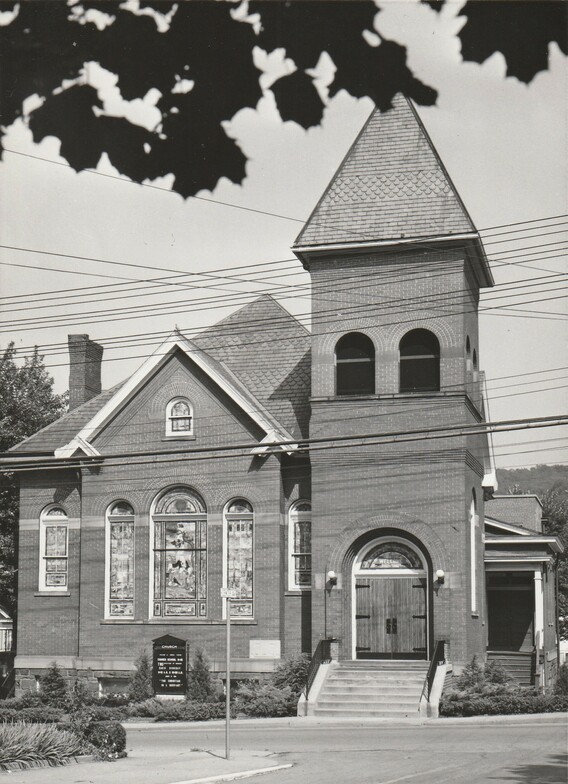
The new church was completed the following year, and dedication services were held on July 21, 1912.
The original Tabernacle building was subsequently sold to one of the church trustees. It eventually became part of a residence in the Valley View area.
The year 1912 brought another important milestone. At the Annual Conference, Elm Grove received a “station appointment,” meaning the church would now have its own full-time pastor.
As the congregation grew, so did its ministries.
The Epworth League, a young people's organization, was established in 1908, and a Boy Scout troop was organized in 1913.
During both World Wars, service flags were displayed in the church, with stars honoring church members who were serving their country.
The congregation also celebrated its life together through homecomings, anniversaries, open houses, special programs, and other community events.
By 1929, Elm Grove had grown to 536 members, creating a need for additional space and facilities.
For several years, the church did not have a parsonage and rented housing for its ministers. That changed in May 1921, when a home on Marshall Avenue was purchased for $6,700.
The Marshall Avenue parsonage served the church for more than four decades. In 1966, a new parsonage was built.
In 1936, the sanctuary underwent a significant rearrangement. The pews were turned to face the west side of the sanctuary, and a new pulpit was installed.
The congregation also gratefully accepted a used organ from the Fourth Street and Zane Street churches, now known as Thompson United Methodist Church. The organ was dedicated in April 1937.
The organ remained a part of Elm Grove's worship for many years before being dismantled in 1973. A portion of the paneling that once surrounded the organ was preserved and later incorporated into a cabinet for the church's public address system.
As Elm Grove continued to grow, the need for additional educational and worship space became increasingly apparent.
Groundbreaking for an educational addition and sanctuary renovation took place in January 1953. The improvements represented a major step forward for the congregation, with dedication ceremonies held on January 25, 1959.
A wheelchair ramp was added in 1960, making the church more accessible.
The church's Sunday School classes also played an important role in supporting improvements and ministries. Groups such as the Golden Links, Silver Links, Winsome, Comrade, and 79'ers held dinners, strawberry festivals, and other fundraisers and activities to help meet the needs of the growing church.
By 1962, the church roster had grown to an impressive 1,018 members, and a mid-week Bible School program was introduced.
In 1966, the church's name was changed from First Methodist Church—Elm Grove to Elm Grove Methodist Church.
Two additional pieces of property were purchased in 1968, providing opportunities for future growth and expansion.
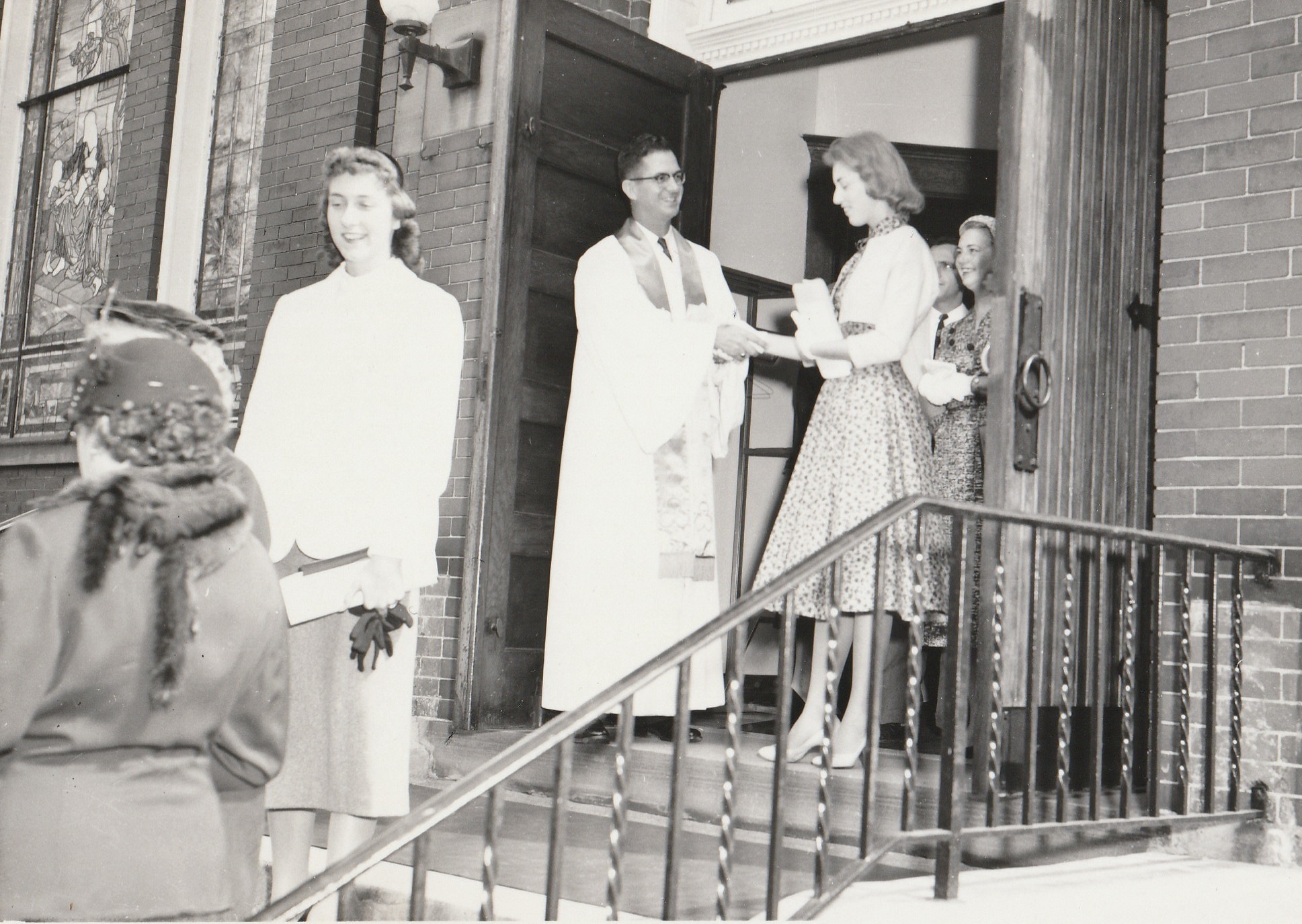
The early 1970s brought another period of change. Plans were developed to modernize the sanctuary, including:
New pews
Updated electrical wiring
A new communion rail
New carpeting
Repairs and restoration of stained-glass windows
Renovations to other areas of the church
Repositioning the pews to their original orientation
A new electronic organ
The first worship service following the modernization was held on November 11, 1973, followed by dedication ceremonies on December 2, 1973. The new organ was dedicated in September 1974.
By the early 1980s, the congregation once again recognized the need for additional space. In 1984, plans began for a new educational wing that would provide additional Sunday School classrooms, Newmeyer Hall, and space for the pastor's office.
Groundbreaking for the new wing took place in April 1986.
Later that year, the congregation celebrated the 75th anniversary of the laying of the church's 1911 cornerstone with a special Jubilee celebration at Oglebay. Former pastors returned to join the congregation in celebrating Elm Grove's long history of faith and ministry.
In the years that followed, the church continued to invest in its future. Additional properties were acquired, buildings were removed, and paved parking areas were developed to better serve the congregation and the surrounding community.
Following the completion of the educational addition in 1986, Elm Grove United Methodist Church continued to grow and adapt to meet the needs of its congregation and community. Over the decades that followed, the church continued its ministries of worship, music, Christian education, missions, fellowship, and community outreach while making improvements to its facilities and expanding its service to others.
Today, Elm Grove UMC continues the legacy begun by those early Methodists who gathered in homes and schools more than a century ago.
From a small group of Methodists meeting in homes and schools in 1886 to the congregation we are today, the history of Elm Grove United Methodist Church is a story of faith, perseverance, service, and community.
Generations of people have worshiped within these walls, taught Sunday School, sung in choirs, served their neighbors, raised families, and answered God's call to ministry.
The buildings have changed. The congregation has grown. Ministries have evolved to meet new needs.
But one thing has remained constant: a commitment to follow Christ and serve others.
As we look toward the future, we give thanks for those who came before us and for the foundation they built. We are grateful to be part of the continuing story of Elm Grove United Methodist Church—and we look forward to the chapters yet to be written.
Our history is behind us. Our mission continues. Our future is in God's hands.
Historical Sources
This history was compiled from Cooking Through the Years: Elm Grove United Methodist Church (1997), as preserved and made available by the Ohio County Public Library, along with historical records of Elm Grove United Methodist Church.